
Mini Bernedoodles for sale, Tuxedo Bernedoodles for sale, Puppy Culture Breeders, Responsible Breeders, Bad Ass Breeders, Mini Bernedoodle Breeder, Bernedoodle Breeder, Butterscotch Bernedoodles, Cavapoo Breeders, Cavapoo puppies, Fluffy puppies, Hypoallergenic dog breeders, Family friendly dogs, Hypoallergenic puppies, Tricolored Puppies, Red puppies, Tuxedo puppies, Family friendly puppies, Breeding rights, Cavapoos for sale, Poodles for sale, Moyen poodles for sale, Mini poodles for sale, Moyen poodle breeders, Parti poodles, Tricolored Parti poodles, Red poodles, Red Parti poodles, Poodle studs,
Poodle studs in Utah, Tricolor poodle stud, Tricolor Parti poodle stud, Phantom Parti poodle stud, Hidden phantom poodle stud, AKC poodle stud, AKC Mini Poodle studs, AKC Standard Poodle stud, AKC toy poodle stud, Intense red poodle studs, Red AKC poodle stud
Cavapoo Health & Testing


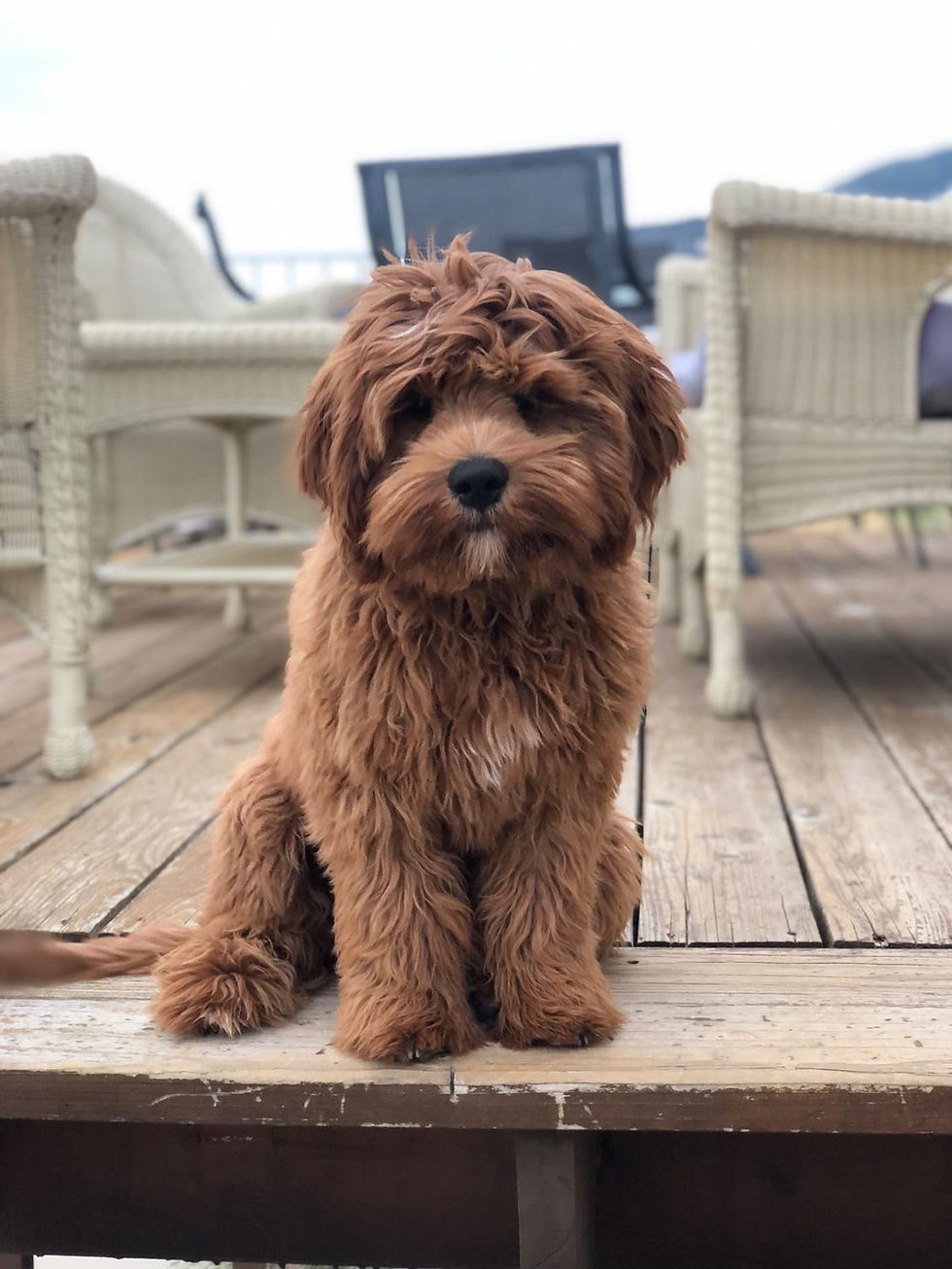







I want to be honest with you right from the start, because that is the only way I know how to do this. When families ask me about cavapoo health problems, they want real answers, not just reassurance. As I always say: "These are living creatures that are unpredictable just as humans are." Responsible breeding is not about promising you a perfect dog. It is about doing the hard, unglamorous work of health testing, learning everything I can about genetics, and being transparent with families every step of the way. This page is an honest look at what I test for, why, what testing can and cannot tell us, and what to know going into life with a Cuddle Cavapoo.
Cavapoo Lifespan: How Long Do Cavapoos Live?
My Cuddle Cavapoos have a life expectancy of 12–15 years. That range is not a guarantee. It is a reasonable expectation based on the parent breeds and on small-dog longevity in general. No peer-reviewed dataset exists specifically for Cavalier × Poodle crosses, so I will not pretend otherwise. Like any dog, a Cavapoo's lifespan is shaped by genetics, daily care, and preventive veterinary care.
Why Genetics, Daily Care, and Veterinary Visits Matter
Health testing helps me make more informed decisions about which dogs I pair together, but it cannot account for every outcome across a dog's lifetime. Genetics get you to the starting line; daily care keeps the dog in the race.
Senior vet care generally starts around age 8, and I encourage you not to skip those senior wellness visits. Please build a strong relationship with your own vet and ask them everything: what to feed, how much exercise, what vaccines and how often, and what to watch for as your dog ages. They know your dog; I know genetics. You need both.
Cavapoo Health Problems: Understanding Parent-Breed Risks
The honest way to talk about cavapoo health problems is to talk about what each parent breed carries, rather than making blanket claims in either direction. Because Cavapoos are part Cavalier King Charles Spaniel and part Poodle, I look carefully at the health concerns documented in both breeds. Crossbreeding does not automatically eliminate inherited disease risk; any "hybrid vigor" claim has to be looked at condition by condition, not assumed across the board.
Everything below is a parent-breed risk, not a diagnosis or a prediction for any individual puppy. If you have questions about any of these conditions, please ask your vet.
Cavalier King Charles Spaniel Health Considerations
The Cavalier is one of the sweetest breeds on the planet, and I adore them, but the breed does come with some significant health considerations.
-
Mitral valve disease (MVD): A progressive heart condition that is a leading health concern in Cavaliers and generally becomes more common as they age.
-
Syringomyelia: Fluid-filled cavities in the spinal cord, often associated with a skull-structure concern called Chiari-like malformation. There is currently no DNA test for it, so pedigree awareness matters a great deal.
-
Episodic falling and curly coat/dry eye syndrome: Both are documented in Cavalier lines, and DNA tests exist for both. Ask me what a specific parent's results cover.
Poodle Health Considerations
Poodles are remarkable dogs genetically, and it is one of the reasons I love working with Moyen Poodles. But they have their own inherited health considerations too.
-
Progressive retinal atrophy (PRA): An eye condition that can lead to vision loss. A DNA test is available.
-
Patellar luxation: Kneecap instability, generally seen at higher rates in smaller Poodle varieties. It is typically evaluated through orthopedic screening rather than DNA.
-
Addison's disease: A condition affecting the adrenal glands, generally reported at higher rates in Poodles than in dogs overall. It does not have a simple DNA test, which means it cannot be screened away entirely.
I keep all of these in mind when I build my health program, not to scare anyone, but because informed decisions start with honest information.
Cavapoo Heart Problems and Responsible Planning
Because of the Cavalier side of the pedigree, cavapoo heart problems are something I take seriously. Crossbreeding changes the genetic picture, but it does not erase the conversation. Health screening of parent dogs and pedigree awareness are part of how I approach responsible breeding, and ongoing veterinary monitoring matters for every individual dog throughout its life. If you ever have a concern about your Cavapoo's heart health, anything that feels off, please call your vet right away. I am not able to give you medical guidance, but they can.
How I Approach Cavapoo Health Testing
I am OBSESSED with canine genetics. I teach genetics classes to other breeders, and cavapoo health testing is one of the most important things I do. Testing is one part of a larger program that also includes careful observation of my parent dogs, transparent communication with families, veterinary care, and a very intentional approach to raising each litter. You can meet the moms behind our litters on Our Girls.
DNA Testing Through Embark and Animal Genetics
I use Embark DNA testing, which screens for 175+ diseases, for my parent dogs. When deeper or more specific testing is needed, I turn to Animal Genetics. DNA testing can tell me a lot: whether a dog carries a recessive variant and which traits it is likely to pass on. But not every health condition has a DNA test. Testing is a tool that helps me make better decisions; it is not proof that every possible health outcome has been ruled out.
OFA Screening and Veterinary Evaluation
I also complete breed-specific OFA testing through a certified veterinarian for my parent dogs. Cavaliers and Poodles have different screening priorities, and I approach each dog accordingly. OFA results help me make more informed pairing decisions, but an OFA clearance does not guarantee a dog's future health, and it does not mean I am promising you a problem-free dog.
Riverside Pet Care and Early Puppy Exams
For canine fertility support, I work with Riverside Pet Care, canine fertility specialists in Saratoga Springs, Utah. Every puppy receives a veterinary exam at approximately 6–8 weeks of age, an important checkpoint before go-home.
CDDY Awareness in Cavapoos
If you have been researching small-breed and Poodle-line health, you may have come across CDDY and IVDD. CDDY refers to an FGF4 retrogene variant associated with chondrodystrophy, a type of cartilage development that is generally linked to a higher risk of intervertebral disc disease (IVDD). It has been documented in a number of small breeds, including some Poodle lines. To be straightforward: there is currently no published data on how often this variant appears in Cavapoos as a cross. It is on my radar, and I think every breeder should be informed about it. I have written more about the science in What is CDDY? Its Prevalence and Link to IVDD.
What Families Should Know About CDDY Results
Genetic testing for the CDDY variant reports a dog as clear, carrier, or affected. Those results matter when breeders make pairing decisions. However, a single genetic result does not tell the whole story of a dog's spinal health, and it does not predict every possible outcome over a dog's life. If you have questions about your Cavapoo's back health, mobility, or activity level, please ask your vet.
Puppy Preventive Care Before Go-Home
Before my puppies go home, they have a real start on their care. Beginning at week 3, puppies are dewormed every two weeks. First vaccines are given at approximately 6 weeks, and the next round is typically due around 9–10 weeks. Vaccine and deworming records go home in the Puppy Go Home Packet, so you can pick up the schedule with your own vet right away.
I am firm on this: puppies should not visit dog parks, go on walks, or put their paws on floors where other dogs go until they are fully vaccinated, including rabies. Your vet can help you set the right vaccination timeline for your puppy.
Supporting a Safe Transition Home
The work I do is a foundation, not a finish line. The lifetime of care that follows, from annual wellness exams to senior checkups, is on you and your veterinarian together. My job is to give your puppy the best possible start, and I offer a lifetime of support along the way.
Health Guarantee, Insurance, and Transparent Communication
Every Cuddle Cavapoo comes with a 2-year health guarantee, with the details outlined in the Purchase Agreement. I also provide 30 days of free Trupanion pet insurance with no waiting period, so coverage is in place from the first day.
Why Testing Results Are Shared Privately
"Because there are so many scammers stealing my pictures, I do not post my parent dogs' health results here online. However, I am always happy to email or text them to you privately." Private sharing is not about hiding anything. When you reach out directly, you know you are talking to me, the actual person behind this program, and you will always have access to the results. You can read more about what goes into our program on Why Choose Us.
Choosing a Cavapoo With Realistic Health Expectations
Thoughtful testing, consistent veterinary care, transparent communication, and daily family care all matter, and none of them, alone or together, can promise you a disease-free dog. "These are living creatures that are unpredictable just as humans are." I believe that with my whole heart.
What I can tell you is that I have done the work. I test my parents, I keep learning the genetics behind these dogs, and I will be honest with you even when the answer is uncertain. If you are curious about a planned litter on our upcoming puppies page, want to ask about the testing behind a particular pairing, or just want to talk through the process, reach out. I love these conversations. You can also follow along on Instagram @wonderful_world_doodles.
Frequently Asked Questions
What are the most common Cavapoo health problems to research?
The concerns most worth researching are the ones documented in the two parent breeds. On the Cavalier side, that includes mitral valve disease, syringomyelia, episodic falling, and curly coat/dry eye syndrome. On the Poodle side, progressive retinal atrophy, patellar luxation, and Addison's disease are worth understanding. These are parent-breed risks, not predictions for any individual Cavapoo, and your vet is the right person to help you decide what monitoring makes sense for your dog.
How long do Cavapoos live?
My Cuddle Cavapoos have a life expectancy of 12–15 years. That range is based on parent-breed and general small-dog patterns, since no peer-reviewed lifespan study exists for Cavapoos as a cross. Genetics, daily care, and preventive vet visits all play a role, and senior vet care generally starts around age 8. Partner with a great veterinarian and stay consistent with your dog's care.
Do Cavapoos have heart problems?
The heart concern most associated with Cavapoos comes from the Cavalier side of the pedigree: Cavaliers have a well-documented association with mitral valve disease, which generally becomes more common as they age. I would never tell you crossbreeding eliminates this risk. I health test my parent dogs and make informed pairing decisions, and your vet should be your partner in monitoring your own dog's heart health over time.
What health testing do you do for Cavapoos?
I use Embark DNA testing, which screens for 175+ diseases, for my parent dogs, and Animal Genetics when deeper testing is needed. I also complete breed-specific OFA testing through a certified veterinarian, and every puppy has a vet exam at about 6–8 weeks. Testing supports better breeding decisions, but it is not a disease-free guarantee. Results are shared privately by email or text when you reach out to me.
What is CDDY in Cavapoos?
CDDY is an FGF4 retrogene variant associated with chondrodystrophy and a generally higher risk of intervertebral disc disease (IVDD). It has been documented in a number of small breeds, but there is no published data on how often it appears in Cavapoos as a cross, so I will not speculate on frequency. Testing reports a dog as clear, carrier, or affected, which matters for breeding decisions. If you have questions about your own dog's spinal health or mobility, please ask your vet.